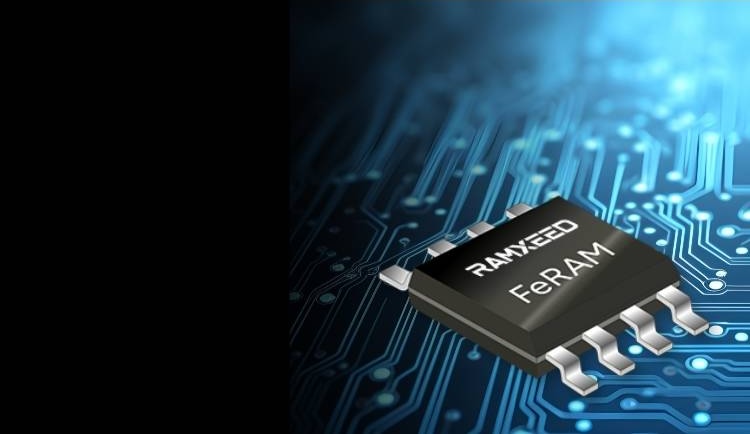
CT scanners require precise, reliable non-volatile memory to support real-time imaging, system settings retention, and error logging. FeRAM (Ferroelectric RAM) and other next-generation memory technologies like MRAM and ReRAM offer solutions with high write speed, endurance, and radiation tolerance suitable for medical imaging devices. This article explains the memory requirements of CT systems, compares memory technologies, and highlights key design considerations for implementation.
CT Scanner Memory Requirements
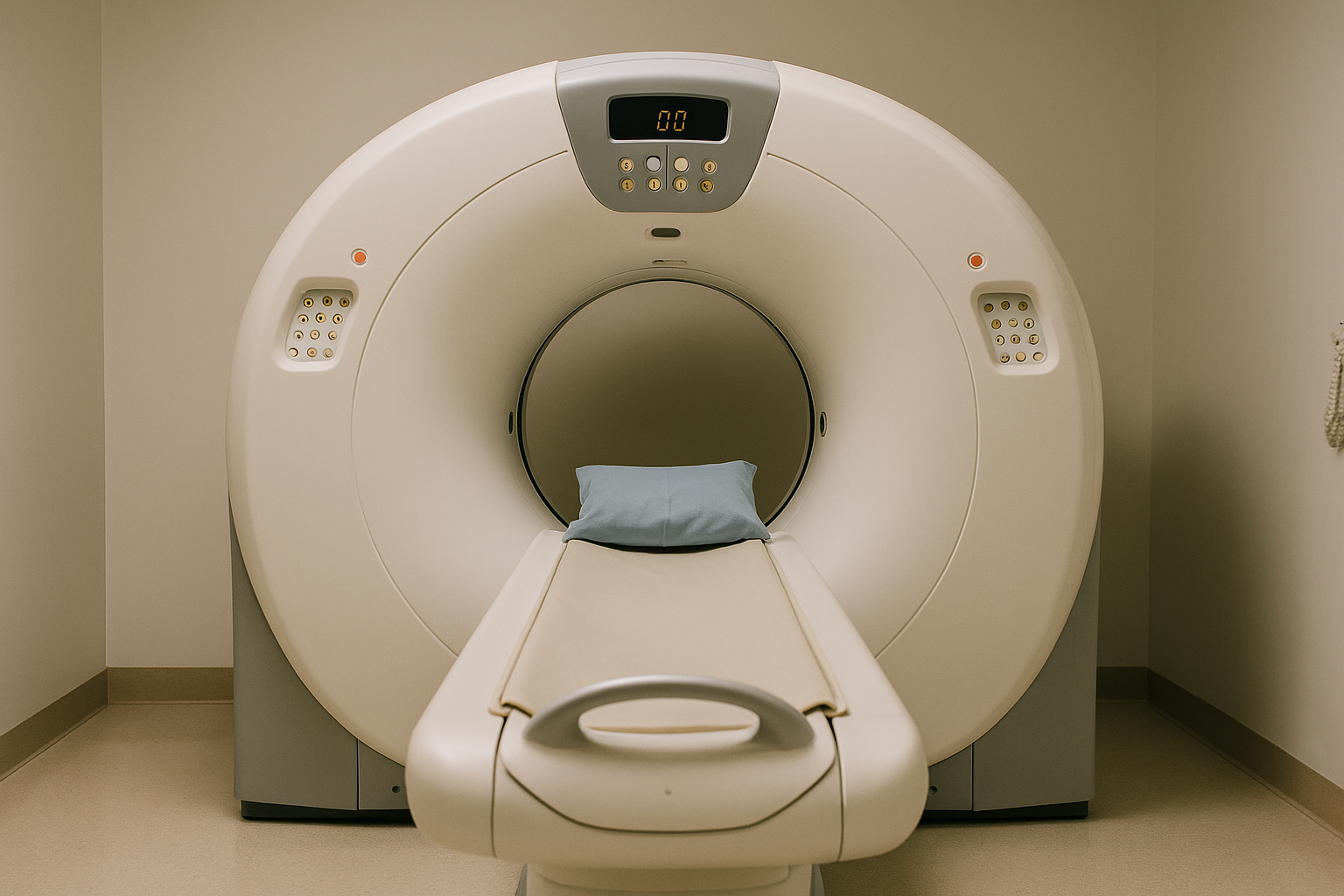
CT scanners are medical devices that require high-precision image reconstruction and real-time signal processing. This makes the memory configuration that supports their data processing extremely important. For purposes such as temporarily storing imaging data, executing control logic, and retaining calibration data, stable operation and high speed are essential, along with the use of non-volatile memory (NVM) that retains information even after a power outage. Furthermore, for medical applications, it is necessary to consider long product life cycles and regulatory compliance. Due to those needs, high-performance memories are preferred such as FeRAM and other Non-volatile memories in CT Scanners.
High-Speed Access & Real-Time Image Processing
CT scanners perform acquisition and processing of sectional images using X-rays. The resulting image data can reach several hundred MB to several GB. Image reconstruction algorithms require high-speed reading and writing. Memory is used in multiple stages, such as imaging buffers, temporary storage areas, and image caches, where low read/write latency and high throughput are crucial. Even non-volatile memory must have sufficient response performance so as not to hinder real-time operations.
Data Retention & Radiation Tolerance
In medical devices, not only high reliability but also robustness capable of withstanding temperature changes, humidity, vibration, and radiation environments such as X-rays is required. CT scanners are adjacent to X-ray generating devices teherfore, it is necessary to consider cases where memory is directly exposed to X-rays. Additionally, requirements such as continuous long-term operation and maintaining patient usage history make long-term stability and low error rates essential. These environmental constraints are key factors that must be prioritized when selecting memory.
Inside a CT scanner, there is a mix of information that is frequently rewritten, such as firmware, calibration data, error logs, and user settings, as well as information that needs to be retained for a long period. This is why it is necessary to select memory technology that balances rewrite endurance (PE cycles) and data retention period. Non-volatile memory, in particular, accumulates stress during rewriting, so quantitative evaluation of durability is required. Bit error rate and retention characteristics are also important reliability indicators during the design phase.
Non-Volatile Memory Options for Medical Imaging
When selecting FeRAM and other Non-Volatile Memories in CT Scanners, it is necessary to evaluate technical suitability from multiple perspectives. The selection should not just be based on memory capacity or price.
The following factors must be considered:
- Write speed
- Radiation resistance
- Power consumption
- Long-term supply availability
For design engineers, understanding how to choose the optimal technology based on the intended use case is essential. Thus, representative non-volatile memory technologies, their principles and suitability for CT scanners are compared in the next paragraphs.
| Memory Type | Write Speed | Endurance | Radiation Tolerance | Suitability for CT Scanners |
| FeRAM | Fast | Very High | Good | ⭐⭐ Advanced |
| MRAM | Fast | Very High | Good | ⭐⭐ Advanced |
| ReRAM | Moderate | High | Good | ⭐ Alternative |
| Flash | Slow | Medium | Limited | ⚠️ Less Suitable |
| EEPROM | Slow | Low | Limited | ⚠️ Not Recommended |
Flash Memory (NAND/NOR) and EEPROM Limitations
NAND and NOR flash memories are widely used and excel in cost performance and high capacity. NAND flash, in particular, is suitable for image storage handling large files, while NOR flash is utilized for code storage and random access.
However, in radiation environments like those in CT scanners, there is a risk of increased bit error rates due to X-ray induced data corruption and effects on tunnel oxide films. Additionally, there are limits to the program/erase (PE) cycles, making it less suitable for applications requiring frequent rewriting.
Studies comparing EPROM and EEPROM under gamma/X‑ray radiation show that EEPROM can suffer permanent damage, whereas EPROM effects may be reversible after reprogramming. In a CT scanner, this directly threatens calibration constants, tube / detector alignment data and safety‑critical configuration parameters.
FeRAM vs MRAM vs ReRAM
Recently highlighted next-generation non-volatile memories include MRAM (Magnetoresistive RAM), FeRAM (Ferroelectric RAM), and ReRAM (Resistive RAM), each with unique characteristics.
FeRAM offers high write speed and low power consumption, making it suitable for log recording and firmware setting retention in CT devices. Structurally, it also provides certain advantages in radiation resistance, ensuring reliability even in X-ray environments. MRAM features high durability and radiation resistance, making it effective for control-related applications, while ReRAM operates at low voltages, contributing to power-efficient designs.
Trends in Radiation-Resistant Memory Technology and Compatibility with CT Devices
Since CT scanners operate in close proximity to X-ray sources, the memory selected must have a certain level of radiation resistance.
Radiation-hardened Flash, CBRAM (Conductive Bridge RAM), and radiation-tolerant MRAM are being applied not only in the aerospace and military fields but also in medical applications. These technologies ensure reliability through measures such as SEU (Single Event Upset) protection and cell structure redundancy. For medical devices, achieving both radiation resistance and long-term stable supply is crucial.
Design Considerations for CT Scanner Implementation
In addition to selecting the memory technology, there are various considerations at the implementation level when integrating it into CT scanners. Maintaining signal quality under X-ray exposure, preventing malfunctions, and appropriately designing the memory hierarchy for each application are major factors. This section summarizes the points that design engineers should particularly pay attention to when designing the integration of non-volatile memory into CT scanners.
Minimizing the Risk of Malfunction (X-ray Effects and Bit Errors)
X-rays can affect trapped charges within memory cells, potentially causing unintended bit flips or retention failures. Measures to address this include :
- Implementing error detection and correction (ECC) technology
- Physical shielding design
- And/Or Using radiation-resistant memory
especially in devices like CT scanners that generate high-energy X-rays, radiation testing during the product development phase and reliability evaluations based on measured error rates are necessary.
Distinguishing Between Cache/Temporary Storage and Long-Term Storage
In CT devices, it is fundamental in design to configure memory hierarchically based on the use of the data. For example, on one hand, there is a use of volatile DRAM or SRAM for high-speed processing during imaging. On the other hand, the use of high-endurance NVM focuses on temporary cache, and there are NVM with excellent long-term stability for storing configuration information and logs.
Although non-volatile memory encompasses various characteristics, it is a must to perform optimal mapping. considering speed, capacity, endurance, and retention. This hierarchical design contributes to achieving both reliability and performance.
Quality Control, Compliance with Standards, and Evaluation Criteria for Memory Selection
In medical devices, compliance with safety standards such as IEC 60601 and ISO 13485 is required. Additionally, quality control systems, including manufacturing traceability, long-term supply assurance, error rate records, and the presence of burn-in testing, are also important evaluation points.
When selecting components during the design phase, it is desirable not only to look at technical specifications but also to check the track record of the product and the supply system.
Summary & Recommended Memory Strategies
CT scanners are devices that support advanced medical diagnostics, and the non-volatile memory used in them requires high reliability, durability, and environmental tolerance. The paragraph below focuses on comparisons of various NVM technologies and key design considerations for implementing them in CT devices. As next-generation technologies expand the range of options, design engineers need to carry out appropriate evaluations based on usage and select components with future maintenance and standard compliance in mind.
For CT scanner applications, it is important to understand the strengths of each technology; flash memory for large capacity, MRAM for high durability, radiation-resistant memory for robustness, and FeRAM for high speed and low power consumption, and to use them according to their intended purpose. For applications with high rewrite frequency and exposure to X-rays, MRAM and radiation-hardened flash are strong candidates. FeRAM is suitable for storing configuration information and calibration data, despite its limited capacity. For cost-focused applications, conventional flash memory is also an option. Selecting the right component for the purpose and environmental conditions is crucial.
Design engineers are responsible for clearly establishing the basis for selecting NVM technologies based on these evaluations and reflecting them in the design in cooperation with the quality assurance department.
When selecting memory, it is necessary to consider not only simple catalog specifications, but also the followings:
- Application’s operating mode
- Temperature environment
- Expected lifespan
- Rewrite frequency
In addition, reliability evaluation requires actual device verification, including error rate testing, radiation testing, and long-term data retention testing.
With future technological advancements, new non-volatile memories such as ReRAM and CBRAM are expected to become more practical. They are particularly promising in terms of low power consumption, high speed, and scalability. However, currently, the perspective of stable mass production and long-term supply, hybrid operation with existing technologies is also realistic. For systems, it is important to prioritize reliability and supply track record while taking a phased approach to evaluating and introducing new technologies.
RAMXEED Lineup
Follow us on LinkedIn for more updates about non-volatile memory and FeRAM !