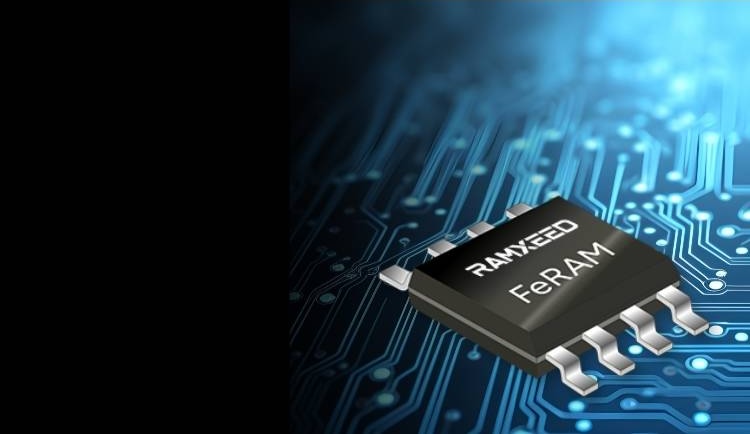
FeRAM-embedded RFID Tags for Medical and Pharmaceutical Sterilization
Sterilization-compatible memory: The perfect choice for medical setting
What Are Radiation-Sterilized RFID Tags?
Radiation-sterilized RFID tags are widely used in medical and pharmaceutical environments to ensure accurate tracking, data integrity, and compliance with sterilization protocols such as gamma and electron beam methods. FeRAM-embedded RFID technology offers superior radiation resistance, fast data logging, and high rewrite endurance compared to conventional EEPROM-based solutions.
RAMXEED develops RFID LSIs (Large Scale Integrated circuits) equipped with FeRAM (Ferroelectric RAM), which offer significant advantages for sterilization tag applications in medical and pharmaceutical fields, used for instance, in medical laboratories.
FeRAM in Sterilization Applications

Radiation sterilization methods, such as gamma rays and electron beams, are technologies that can safely kill bacteria without raising the temperature. Gamma rays have excellent penetration capabilities, few packaging restrictions, and little dose fluctuation, making them suitable for sterilizing a wide range of products. RFID equipped with FeRAM contributes to improving operational efficiency in the medical and pharmaceutical fields.
Radiation Resistance: FeRAM vs EEPROM
Radiation resistance varies depending on the memory’s operating principle. FeRAM stores data using polarization based on ferroelectric materials, so even though it is not designed for radiation resistance, it is inherently highly resistant to charge migration and structural damage caused by radiation.
On the other hand, when using EEPROM, data is stored based on the charge stored on the floating gate. This charge becomes unstable under radiation, causing data loss or corruption, making it less radiation-resistant.
| Feature | FeRAM RFID | EEPROM RFID |
| Radiation resistance | High | Lower |
| Endurance (rewrite) | ~1T cycles | ~100K cycles |
| Power Consumption | Low | Higher |
| Data Integrity post-sterilization | Yes | Risk |
Suitable Materials & Environments for Sterilization
Radiation sterilization is a sterilization method that can be used on a variety of materials, including:
- Products with internal cavities (sealed areas)
- Metal products (e.g., implants)
- Medical devices (e.g., syringes, kits, gloves)
- Powdered or liquid pharmaceutical and cosmetic ingredients
- Metal, glass, rubber, and rolled products
- Sterile bags, pouches, spouts, and serum
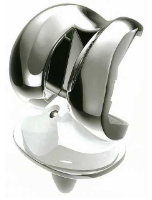
Implants/artificial joints
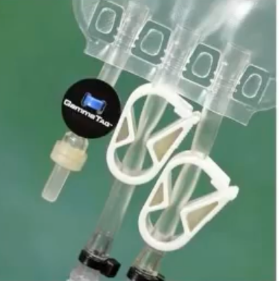
Infusion bags
Key Benefits of FeRAM-Embedded RFID Tags
FeRAM inherently has excellent radiation resistance, preventing data loss even when subjected to sterilization using gamma rays or electron beams. This characteristic allows RFID tags equipped with FeRAM to significantly improve the efficiency of management operations in the medical and pharmaceutical fields. (Note: These products are not specifically designed for radiation resistance.)
RFID tags can be used for accurate tracking and traceability throughout the entire product lifecycle, from manufacturing to disposal. This enables accurate tracking of product history and improves quality control and safety.
Why FeRAM is Ideal for Sterilization Tags
FeRAM-embedded RFID tags are particularly suited for environments requiring gamma ray or electron beam sterilization, thanks to their following characteristics:
- Excellent Radiation Resistance
FeRAM retains data even under exposure to high-energy sterilization methods, ensuring reliable traceability and data integrity throughout the product lifecycle. - Stable Communication Distance
Unlike EEPROM-based RFIDs, FeRAM maintains consistent communication distances for both read and write operations, improving reliability in wireless environments. - High-Capacity Memory
FeRAM RFID tags can store up to 8KB of data, supporting detailed tracking of product history, sterilization records, and inspection data.
Battery-Free Operation
FeRAM’s low power consumption enables RFID tags to operate without batteries, reducing maintenance costs and enabling compact, maintenance-free designs.
High Endurance & High-Speed Logging
Compared to EEPROM, FeRAM offers:
- Faster data writing speeds
- Up to 1 trillion rewrite cycles, making it ideal for frequent data logging in sterilization and medical environments.
Product Line for Sterilization (RFID)
MB89R118C1-DIAP15
User memory: 2000Byte
Input capacitance:24pF
Memory type: FeRAM
Transmission protocol: ISO/IEC, 15693, ISO/IEC18000-3 (Mode1)
Datasheet
MB89R118C2-DIAP15
User memory: 2000Byte
Input capacitance: 96pF
Memory type: FeRAM
Transmission protocol: ISO/IEC 15693, ISO/IEC18000-3 (Mode1)
Datasheet
MB89R119B1-DIAP15
User memory: 232Byte
Input capacitance: 24pF
Memory type: FeRAM
Transmission protocol: ISO/IEC 15693, ISO/IEC18000-3 (Mode1)
Datasheet
MB89R119B2-DIAP15
User Memory: 232Byte
Input capacitance: 96pF
Memory type: FeRAM
Transmission protocol: ISO/IEC 15693, ISO/IEC18000-3 (Mode1)
Datasheet
MB89R112A1-DIAP15
User memory: 8192Byte
Input capacitance: 23pF
Memory type: FeRAM
Transmission protocol: ISO/IEC 15693, ISO/IEC18000-3 (Mode1)
Datasheet
MB89R112A2-DIAP15
User memory: 8192Byte
Input capacitance: 96PF
Memory type: FeRAM
Transmission protocol: ISO/IEC 15693, ISO/IEC18000-3 (Mode1)
Datasheet
MB97R8050-DIAP15
Memory type: FeRAM
Transmission protocol: ISO/IEC18000-63 EPC C1G2 Ver.1.2.0
Datasheet
Read more about the Reasons to Choose FeRAM-embedded RFIDs here.