Achieving both high-precision measurement and long lifespan: Memory ideal for smart meters
There are multiple benefits in using FeRAM in electric power meters. It can accurately record consumption even during power outages and reliably capture any fraudulent events. When it is integrated with flash memory, it enables both long-term data storage and high-speed access.
Application of FeRAM in Electric Power Meters
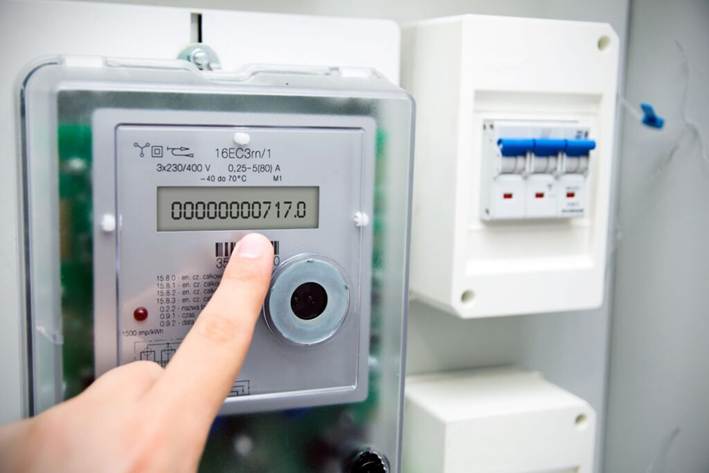
Electric power meters measure electricity consumption, monitor power quality, and transmit this information to a concentrator. This enables power utilities to efficiently manage energy usage through load management. FeRAM is used particularly in three-phase meters where highly accurate measurement of electricity consumption is required. It accuratelyrecords electricity usage even during power outages or momentary interruptions, ensuring proper billing to consumers.
Furthermore, FeRAM precisely records data for irregular events, such as meter cover openings or suspected electricity theft.
Electric Meter Memory Requirements
A three-phase meter is a type of electrical meter designed to measure the power consumption in a three-phase electrical system. Its main functions are the followings.
- Measurement of Power Consumption: It accurately measures the total power consumption in a three-phase system by summing the power used in each of the three phases.
- Monitoring of Power Quality: It monitors various parameters such as voltage, current, power factor, and frequency, ensuring the quality and stability of the power supply.
- Detection of Imbalances: It detects any imbalances between the three phases, which can indicate potential issues in the electrical system.
- Data Logging and Communication: Modern three-phase meters often come with data logging capabilities and communication interfaces, allowing for remote monitoring and data analysis.
Three-Phase Meters are commonly used in industrial and commercial settings due to their efficiency in transmitting electrical power over long distances and their ability to power heavy machinery.
In comparison to single-phase meters, three-phase meters are generally more accurate and capable of handling higher power loads even though they are more complex in design and functionality, providing detailed insights into the electrical system’s performance and enabling better management of power consumption.
Three-phase meters (Diagram)
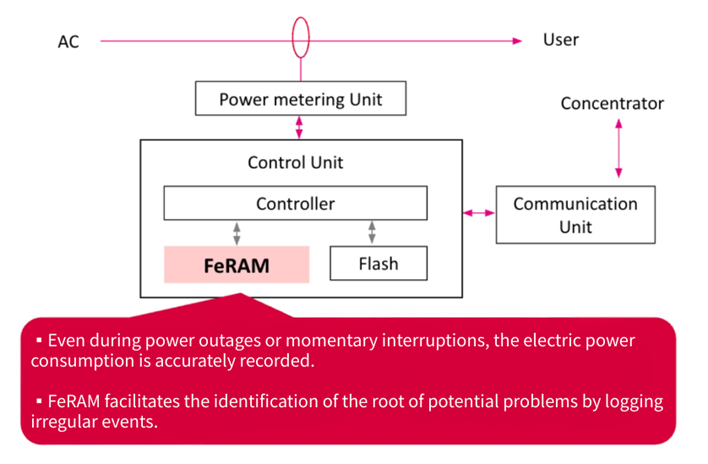
Role of each memory (FeRAM and Flash)
Generally, 3-phase meters use both FeRAM and flash memory. Each type of memory is used to record the following data.
| Memory | Data |
| FeRAM | 1. Power-related data to prepare for power outages (such as power demand, power factor, etc.) 2. Flash memory pointers 3. Event data such as the time of a power outage, meter cover opening/closing, and program errors |
| Flash | Load curve for the past 30 or 45 days (according to regulations) |
Real-Time Energy Logging
When the logging frequency is low
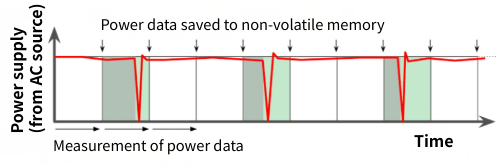
As shown in the example of the figure above, power consumption was measured in nine intervals and logged to non-volatile memory. Although there were three momentary power interruptions, due to the low logging frequency, the green sections where the power temporarily dropped to zero do not reflect accurate power recordings.
When the logging frequency is high
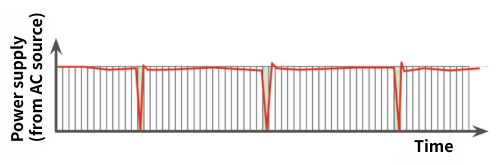
In this diagram, logging to non-volatile memory occurs at a higher frequency, for example, once every 100 milliseconds. Although three brief power interruptions occurred, the high logging frequency ensures that power records are accurately maintained.
Power Failure & Momentary Interruptions
In the case of a power meter using FeRAM, power consumption data can be recorded with high reliability. Per-second data is directly stored in FeRAM, which allows for fast writing, and this data is then consolidated for long-term storage in flash memory. Because pointers indicating the location of data in the flash are also kept in FeRAM, data will not be lost even in the event of a power outage, allowing necessary data to be quickly accessed.
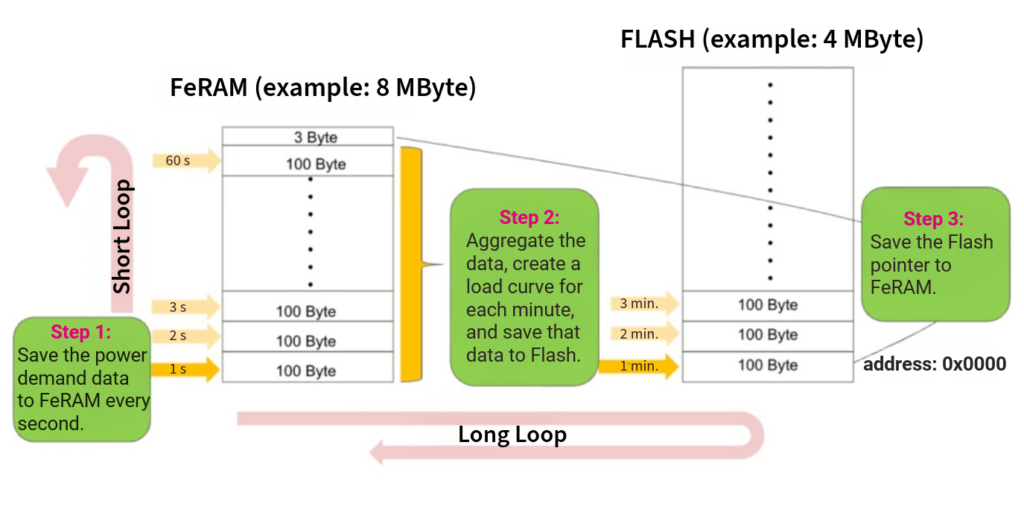
Why Choose FeRAM for Smart Meters
• Even during power outages or momentary interruptions, FeRAM accurately records electricity consumption, enabling proper billing for consumers.
• It also accurately records data for irregular events such as meter cover openings or suspected electricity theft, helping to identify the causes of problems.
•When used in combination with flash memory, FeRAM helps store pointer (address) data for flash.
High Write Endurance & Long Life
When performing data logging every second, NOR FLASH has a lifespan of approximately one day, and EEPROM about ten days, whereas FeRAM, with its outstanding rewrite endurance, allows for long-term use exceeding 100 years.
| FeRAM (MB85RS1MT) | EEPROM (M95M01) | NOR FLASH (W20Q10RL) |
| Over 100 years | 10 days | 1 day |
| Feature | FeRAM | EEPROM | Flash |
| Write endurance | ⭐⭐⭐⭐⭐ | ⭐⭐ | ⭐ |
| Real-time logging | Yes | Limited | Limited |
| Power outage data safety | High | Low | Low |
| Long-term durability | Excellent | Poor | Poor |
Recommended FeRAM Products
🔗MB85RS1MT
Interface: SPI
Capacity: 1 MBit
Voltage Range: 1.8V to 3.6V
Operating Frequency: 33MHz
Operating Temperature: -40°C to 85°C
Package: SOP8
N.B: Recording of electricity demand data and event logs
Datasheet
🔗MB85RS512T
Interface: SPI
Capacity: 512 Kbit
Voltage Range: 1.8V to 3.6
Operating Frequency: 33MHz
Operating Temperature: -40°C to 85°C
Package: SOP8
N.B: Recording of electric power demand data and event logs
Datasheet
🔗MB85RC64TA
Interface: I2C
Capacity: 64Kbit
Voltage Range: 1.8V to 3.6V
Operating Frequency: 3.3MHz
Operating Temperature: -40°C to 105°C
Package: SOP8
N.B: For recording electricity demand data
Datasheet
🔗MB85RC16
Interface: I2C
Capacity: 16 Kbit
Voltage Range: 2.7V to 3.6V
Operating Frequency: 1MHz
Operating Temperature: -40°C to 85°C
Package: SOP8
N.B: For recording electricity demand data
Datasheet