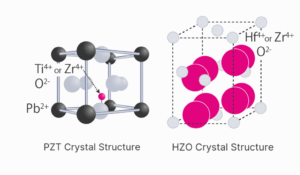
Characteristics of PZT Used in FeRAM
The material used to retain information in our FeRAM products is lead zirconate titanate (PZT). Because PZT was difficult to handle in conventional semiconductor manufacturing processes, the practical commercialization of FeRAM remained challenging for many years. We developed the technology required to integrate PZT into semiconductor products and became the first company in the world to successfully mass-produce FeRAM in 1999.
What Is PZT?
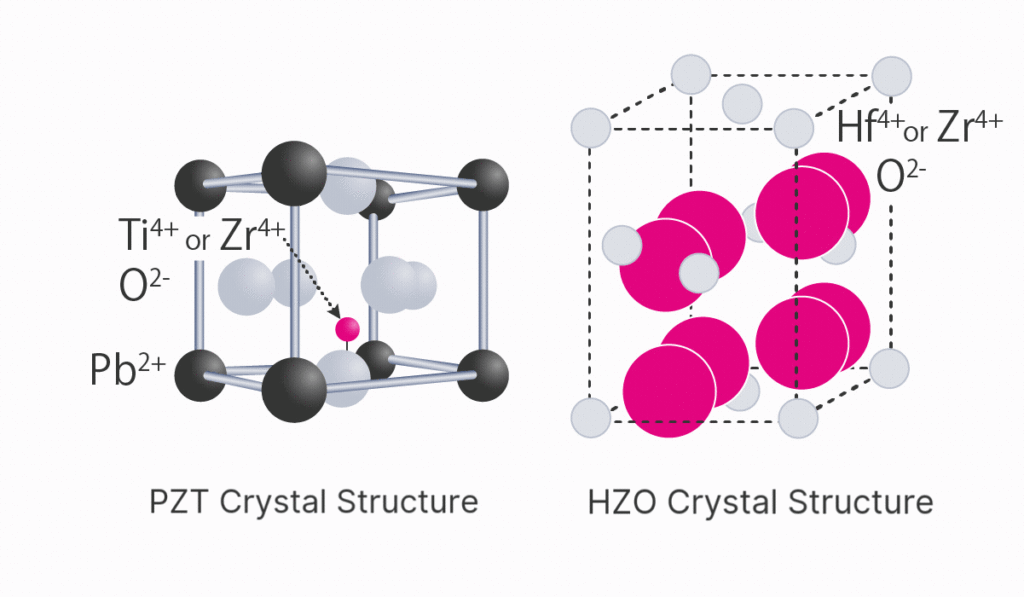
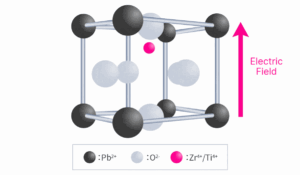
FeRAM (ferroelectric random access memory) uses PZT (lead zirconate titanate) as the material for storing digital data in the form of 0s and 1s. The smallest unit of the PZT crystal structure (unit cell) has the structure shown below.
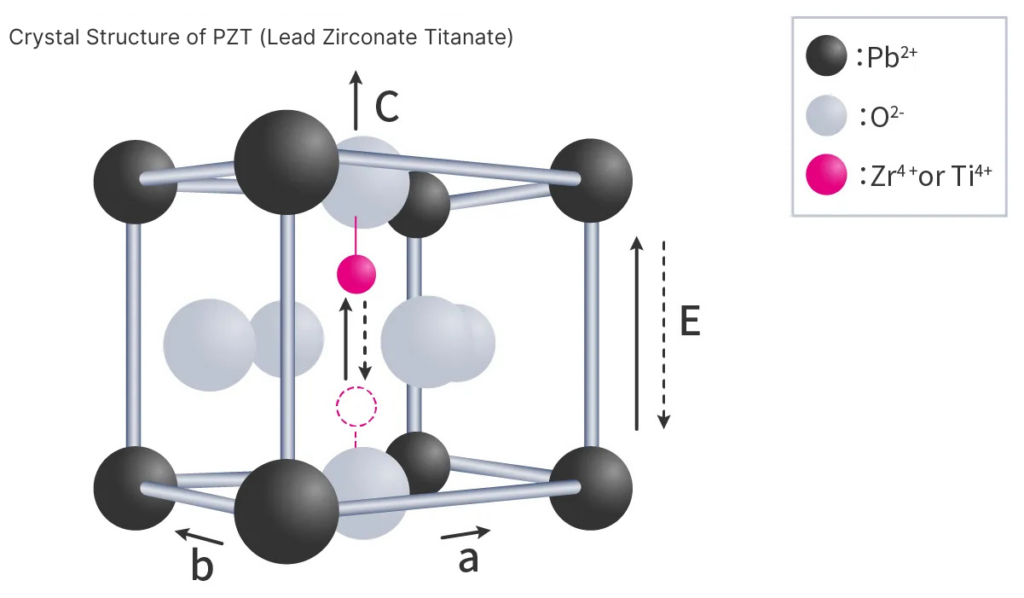
Lead zirconate titanate (Pb(Zr1−x,Tix)O3, PZT) is a ferroelectric material first reported around 1950 by Professor Shirane of the Tokyo Institute of Technology.
What Is a Ferroelectric Material?
Ferroelectric materials are a type of dielectric material, but they also possess piezoelectric and pyroelectric properties. The relationship among these materials is illustrated in the figure below.
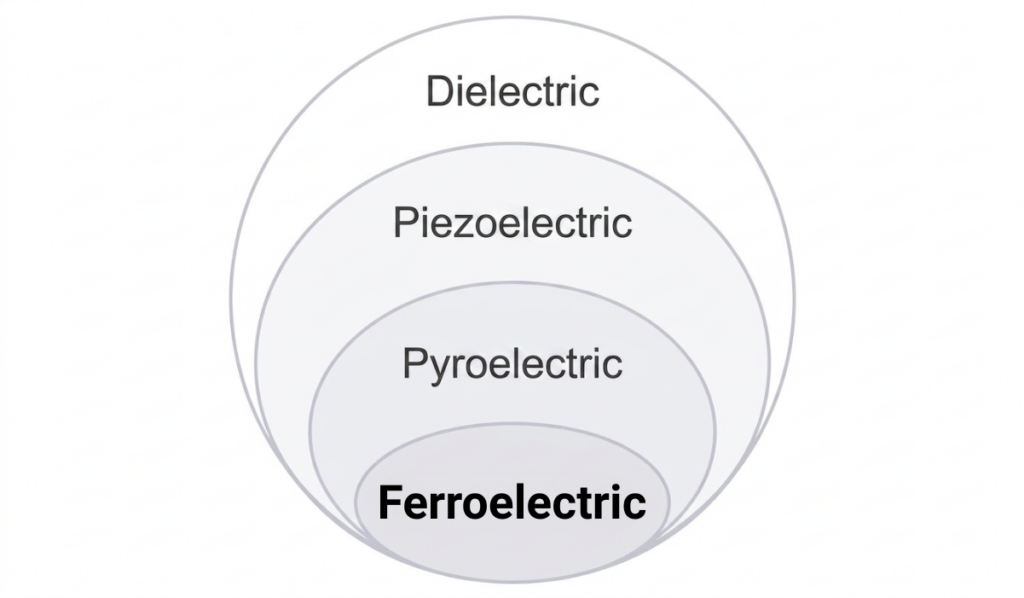
The characteristics of each material can be summarized as follows:
(a) Dielectric Material
A material that does not conduct electricity but can store internal charge when placed in an electric field. It is used in capacitors and has the ability to store electrical energy.
(b) Piezoelectric Material
A material that generates electric charge when physical pressure is applied and, conversely, changes shape when voltage is applied. It is used in sensors and actuators. An actuator is a device that combines a power source and mechanical components to perform mechanical motion; for example, a motor is one type of actuator.
(c) Pyroelectric Material
A material that generates electric charge in response to temperature changes and always possesses a certain degree of polarization. It is used in applications such as infrared sensors.
(d) Ferroelectric Material
A material that becomes polarized when an electric field is applied and retains that polarization even after the electric field is removed. It is used in memory devices and sensors. FeRAM utilizes this property to retain stored data.
Ferroelectric materials possess multiple characteristics from (a) to (d), and all of these properties must be controlled.
When voltage is applied to a dielectric thin film sandwiched between two electrodes and the polarization is measured, a graph like the one shown on the left below is obtained. On the other hand, when the dielectric thin film is replaced with a ferroelectric thin film, the graph becomes like the one shown on the right below. The polarization changes depending on its previous state. This is called a hysteresis curve. At the point where the electrode voltage is zero, the polarization has either a positive or negative value. These are used to represent memory “1” and “0” states for data retention.
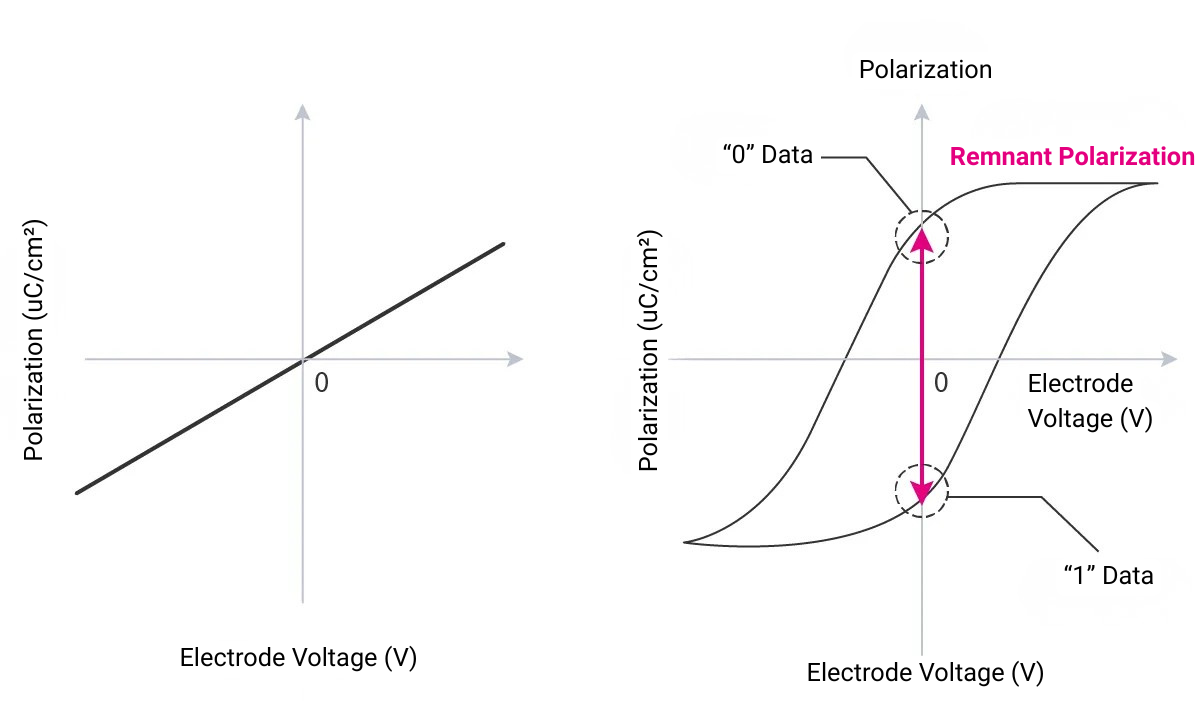
Hysteresis refers to a phenomenon in which the state of a system changes not only according to the force currently applied, but also according to forces applied in the past. It is therefore also referred to as a memory effect or history effect.
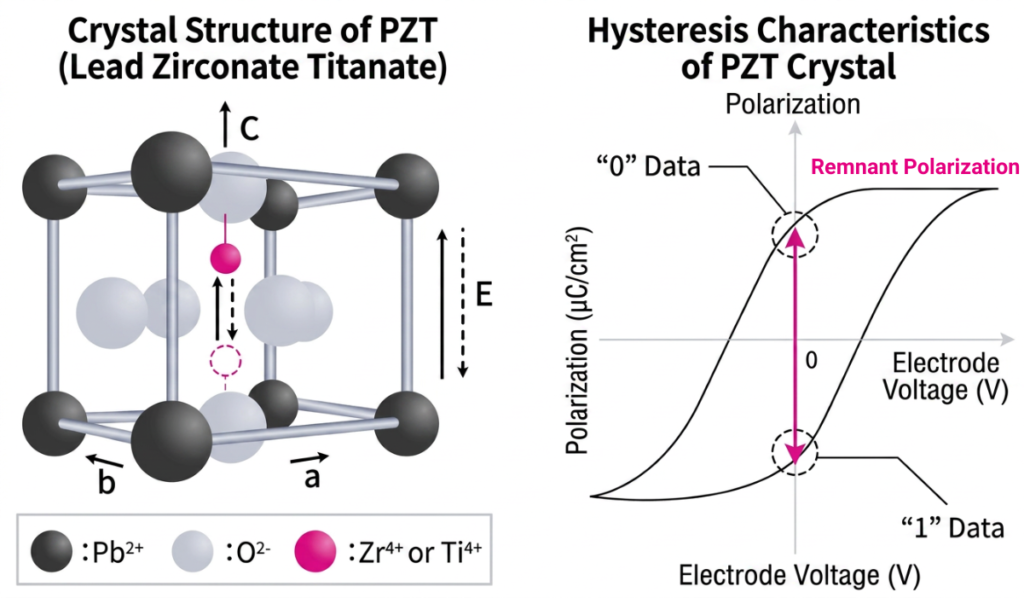
It was expected that if this hysteresis characteristic could be utilized in memory devices, it could become a next-generation memory alternative to DRAM. However, while theoretically possible, it gradually became clear that actual implementation would be extremely difficult.
History of Ferroelectric and Ferroelectric Memory Development
The history of ferroelectric materials and ferroelectric memory is outlined below. Prototype ferroelectric memories using PZT were announced in the United States in the 1980s. However, because PZT was difficult to handle in standard semiconductor manufacturing processes, the mass production of FeRAM could not easily be realized. We developed the technology required to integrate PZT into semiconductor manufacturing processes and became the first company in the world to successfully mass-produce FeRAM in 1999.
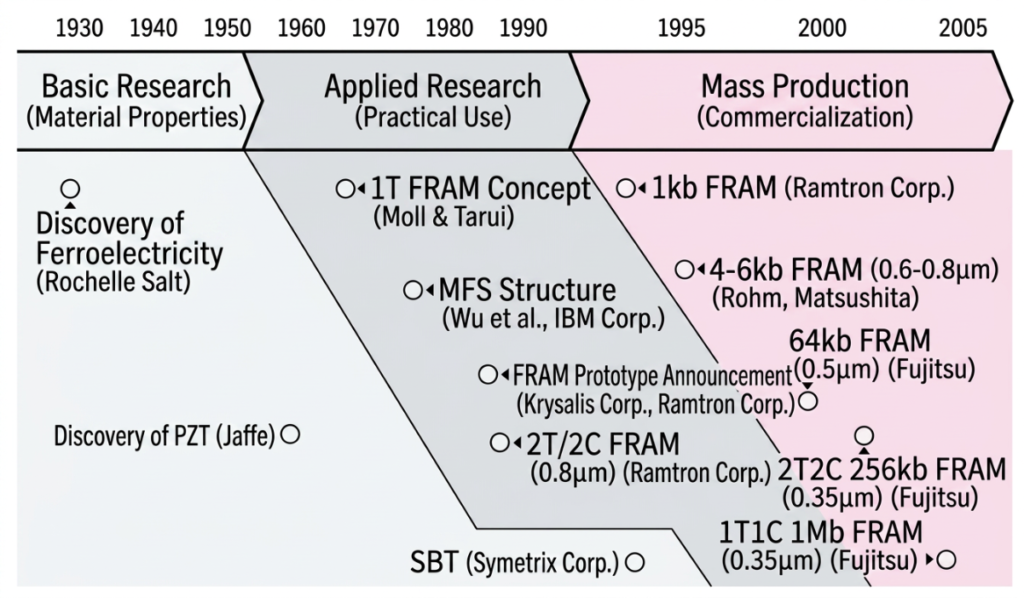
Valasek discovered ferroelectricity in Rochelle salt.
Valasek, J., 1920. Piezoelectric and allied phenomena in Rochelle salt. Phys. Rev., 17, pp.475–481. DOI:10.1103/PhysRev.17.475.
Around 1954, PZT was discovered to be a ferroelectric material.
Researchers around the world began studying the characteristics of PZT and its possible applications. PZT is a solid solution of lead zirconate (PbZrO3) and lead titanate (PbTiO3), and its piezoelectric ceramic properties become strongest when the ratio of zirconium (Zr) to titanium (Ti) is approximately 0.52 to 0.48. As a result, PZT compositions near this ratio are commonly used. At that time, however, it was not yet considered suitable for use in memory devices.
Around 1988, Krysalis Corporation (then known as Krysalis) and Ramtron Corporation (then known as Ramtron) in the United States announced applications of PZT for memory devices.
PZT has a high Curie temperature(*) of 350°C and exhibits sufficiently strong ferroelectric properties at room temperature, suggesting that it could be applied to ferroelectric non-volatile memory. For this reason, PZT became the material adopted in most ferroelectric non-volatile memories developed during the 1980s and 1990s. However, although development progressed, stable mass production remained a challenge, and companies continued trial-and-error efforts during this period.
(*) The Curie temperature refers to the temperature at which a material loses its ferroelectricity and becomes paraelectric. Above this temperature, the crystal structure of PZT changes, causing the loss of piezoelectric and ferroelectric properties.
Around 1993, Ramtron Corporation (then known as Ramtron) succeeded in integrating FeRAM.
Following this achievement, domestic and overseas manufacturers, including our company, advanced the development of FeRAM mass-production technology, while actively accumulating knowledge and presenting research findings on the fundamental properties of PZT and FeRAM manufacturing technology at academic conferences. Through this process, several key technologies required for stable FeRAM mass production were established: (a) stable formation of ferroelectric capacitor elements through optimization of PZT films and upper/lower electrode formation, (b) processing technology for ferroelectric capacitor elements, and (c) integration technology for incorporating ferroelectric structures into existing semiconductor architectures. These developments opened the path toward stable mass production.
In October 1999, Fujitsu began mass shipment of 64 kb high-capacity FeRAM.
Since then, we have continued to provide highly reliable FeRAM products worldwide and proudly maintain the world’s longest track record of FeRAM product shipment and support.